How Much Should You Feed a Dog? A Practical Guide
· By The Golden Paw Team
Feeding your dog the right amount is one of the kindest things you can do for their health. Too little and they miss out on the energy and nutrients they need. Too much, and the extra weight can strain their joints and heart over time. The tricky part is that the "right" amount is different for every dog.
The good news is that a few simple factors, weight, age, and activity level, will get you very close. In this guide we walk through how to read a feeding chart, adjust portions to your individual dog, and use the body condition check that vets rely on. When you are ready to stock up, the picks we feature at Golden Paw link straight to Chewy and Amazon so you can compare bag sizes and daily cost.
Start With the Feeding Chart on the Bag
Every complete dog food includes a feeding guide, usually a chart that matches your dog's weight to a suggested daily amount. This is your starting point, not a fixed rule. The numbers are averages based on a typical adult dog, so treat them as a helpful baseline you will fine-tune from there.
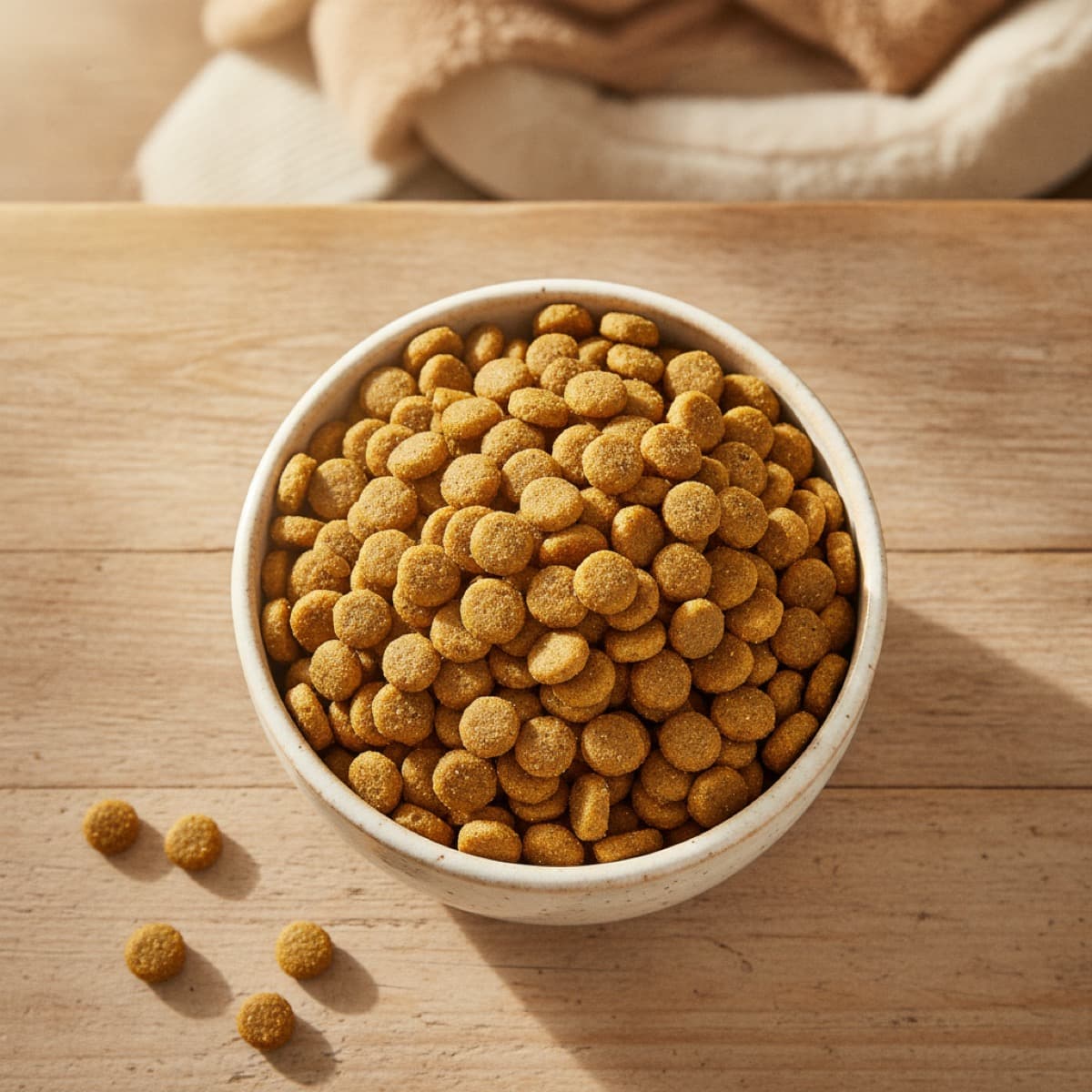
A key detail many owners miss: the chart lists the total amount for the whole day, not per meal. If the chart says two cups and you feed twice a day, that is one cup per meal. Measure with an actual measuring cup rather than eyeballing it, since guesswork is the most common reason dogs end up over- or underfed.
Adjust for Age and Life Stage
Puppies need more food relative to their size because they are growing fast, and they usually eat several small meals a day. As they mature, their calorie needs per pound drop, and most adults settle into two meals a day. Senior dogs often need slightly less because they tend to be less active, though this varies a lot by individual.
Life stage also affects how the calories are used. A growing puppy channels food into building muscle and bone, while an older dog may need fewer calories but the same or higher-quality protein to maintain muscle. If your dog is pregnant, nursing, or recovering from illness, their needs shift again, so check with your vet for those special situations.
Factor in Activity Level
Two dogs of the same weight can need very different amounts of food. A high-energy working dog or a pup who runs several miles a day burns far more calories than a couch companion who enjoys short strolls. Active dogs may need portions at the higher end of the feeding chart, while less active dogs typically do well at the lower end.
Weather and season play a role too. Some dogs are more active in cooler months and slow down in the heat. It is normal to nudge portions up or down as your dog's routine changes, as long as you keep an eye on their weight and body condition over time.
Use the Body Condition Check
The most reliable way to know if you are feeding the right amount is not the scale, it is your hands and eyes. A dog at a healthy weight has ribs you can feel easily under a thin layer of fat, a visible waist when viewed from above, and a tucked-up belly when seen from the side. If the ribs are hard to feel, your dog is likely carrying extra weight.
Check this every couple of weeks. If your dog is gaining, trim the portion slightly. If they seem too lean or low on energy, add a little back. Small adjustments of around ten percent are usually enough. Sudden weight changes without a diet change are worth a vet visit to rule out health issues.
Do Not Forget Treats and Extras
Treats add up faster than most owners realize. As a general rule, treats should make up no more than about ten percent of your dog's daily calories, with the rest coming from their balanced meals. If you train with a lot of treats, consider using a portion of their regular kibble as rewards or choosing small, low-calorie options.
Table scraps and chews count too. A few bites here and there can quietly tip a well-portioned dog into overfeeding. Keeping treats in check is one of the easiest ways to keep your dog trim without cutting back on meals they enjoy.
Set a Consistent Feeding Routine
Most adult dogs do best on two measured meals a day at roughly the same times. A predictable routine helps digestion, supports house-training, and makes it easier to notice if your dog's appetite changes, which can be an early sign something is off.
Free-feeding, where food is left out all day, makes it hard to track how much your dog eats and often leads to weight gain. Measured meals give you control and a clear picture of your dog's habits. Fresh water, of course, should always be available around the clock.
Frequently asked questions
- How many times a day should I feed my dog?
- Most adult dogs do well with two meals a day. Puppies usually need three or four smaller meals because they are growing and have smaller stomachs.
- Should I follow the feeding chart exactly?
- Use it as a starting point. The chart is based on an average dog, so adjust up or down based on your dog's weight, activity, and body condition.
- How do I know if I am overfeeding my dog?
- If you cannot easily feel your dog's ribs or see a waist from above, they are likely getting too much. Trim the portion slightly and recheck in a couple of weeks.
- Is free-feeding a good idea?
- For most dogs, measured meals are better. Free-feeding makes it hard to track intake and often leads to weight gain. Fresh water, however, should always be available.
Shop these picks
Found this helpful? Make us a preferred source on Google.
Ready for an exact price?
Get a free, no-pressure in-home estimate. Real numbers for your home, not a phone guess.